
1. The first Olympic Games took place in 776BC
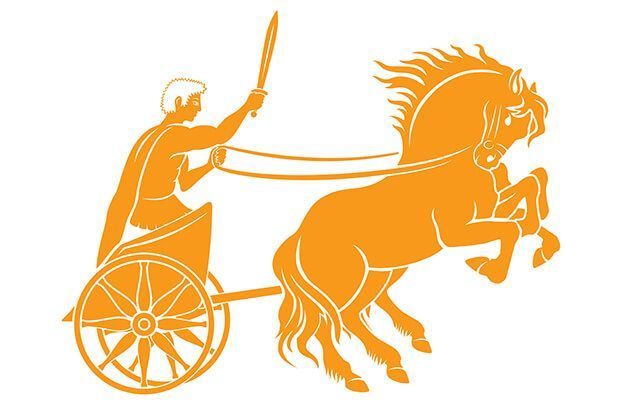
The original Olympics began as part of an Ancient Greek festival, which celebrated Zeus, the Greek God of sky and weather. The whole competition lasted for up to six months, and included games like wrestling, boxing, long jump, javelin, discus and chariot racing.

2. In 393 AD, the Olympic Games were cancelled and didn’t start up again for over 1,500 years!
Emperor Theodosius I, a Roman ruler, banned the Greek Olympics due to the religious element of the celebration. He considered the Olympics to be a pagan festival, which had no place in his Christian country.
So, that was the end of the Olympics until 1896, when a man named Baron Pierre de Coubertin started a revival of the Games. He called this new event the ‘modern Olympics’ – and it’s still going today!

3. The Olympic torch is a reminder of the Games’ Greek origins
In ancient times, a flame burned throughout the Games as a tribute to the goddess, Hestia. Since 1928, this tradition has continued in the modern Games, but instead of an altar, the flame burns in a special torch.
The torch flame is always lit by the sun in Olympia, Greece, as this is where the first Greek Games was held. Then, it’s passed from torch to torch in a massive international relay that ends in the host city – wow! New torches are designed for each Olympics, and several thousand copies are made. It’s a great honour to become a torchbearer, and lots of inspiring people get a turn each time.

4. The first Summer Olympic Games had just 14 participating countries
Teams from 11 European countries originally joined those of Australia, Chile, and the USA at the first host city, Athens. Now, more than 200 countries compete in the Olympics each year!

5. The Olympic symbol was designed to include everyone
The Olympic rings were first produced in 1913, from a design created by the Games’ modern founder – Baron Pierre de Coubertin! Their five colours (along with the white backdrop) reflect colours found on the flags of all participating nations, so everyone is represented. The overlaps also represent international cooperation, and the coming together of athletes from all over the world – cute!

6. Motor boat sailing, hot air ballooning, and tug of war all used to be Olympic sports!
Over time, different sports and events are voted into (or out of) the Olympic Games. Some disappear, then return (like golf, or rugby), while others (like running deer shooting, or duelling pistols) go out of fashion forever – thankfully!

7. The first Winter Olympic Games were held in 1924, in a different city to the Summer Olympics.
At first, the Winter Olympics took place in the same year as the Summer ones, but organisers soon realised that it made more sense to hold them in different years! As a result, the Winter Olympics now occur two years after the Summer Olympics. Nice!

8. From 1921-1948, artists participated in the Olympics too
In these games, painters, sculptors, architects, writers, and musicians all took part! They competed for medals by creating works of art, that often celebrated the sporting successes going on at the same time. While artists stopped officially competing in 1948, many still design posters and other merchandise for the Games today!

9. Until 1912, first-place Olympic medals were made of solid gold!
Possibly one of our favourite facts about the Olympics! Sadly though, it’s no longer the case. Recent Games have given out around 5,000 bronze, silver, and gold medals in total – that’s a lot of metal! So instead of being created from solid gold, the heavy first-place medals are now covered in 6 grams of it.

10. The modern Olympic Games aren’t just about sporting glory – they’re about making friends, too!
While competitive spirit is important, the Games are also about international cooperation. They’re a great chance for people from countries around the world to meet up and get to know each other! For the 16 days of competition, athletes from all sports, religions, nationalities and cultures live and work together – and they often leave as good friends. Aww!

Written by: natgeokids.com
Thanks for blogging with us!
Please visit www.LouisianasMarketplace.com for some great options in potentially reducing your Health coverage cost. Or better yet, call Kevin directly at 985-778-0072 to explore alternative solutions that just might save a bunch of moula!
•More Options •Better Alternatives •True Health Coverage for Less